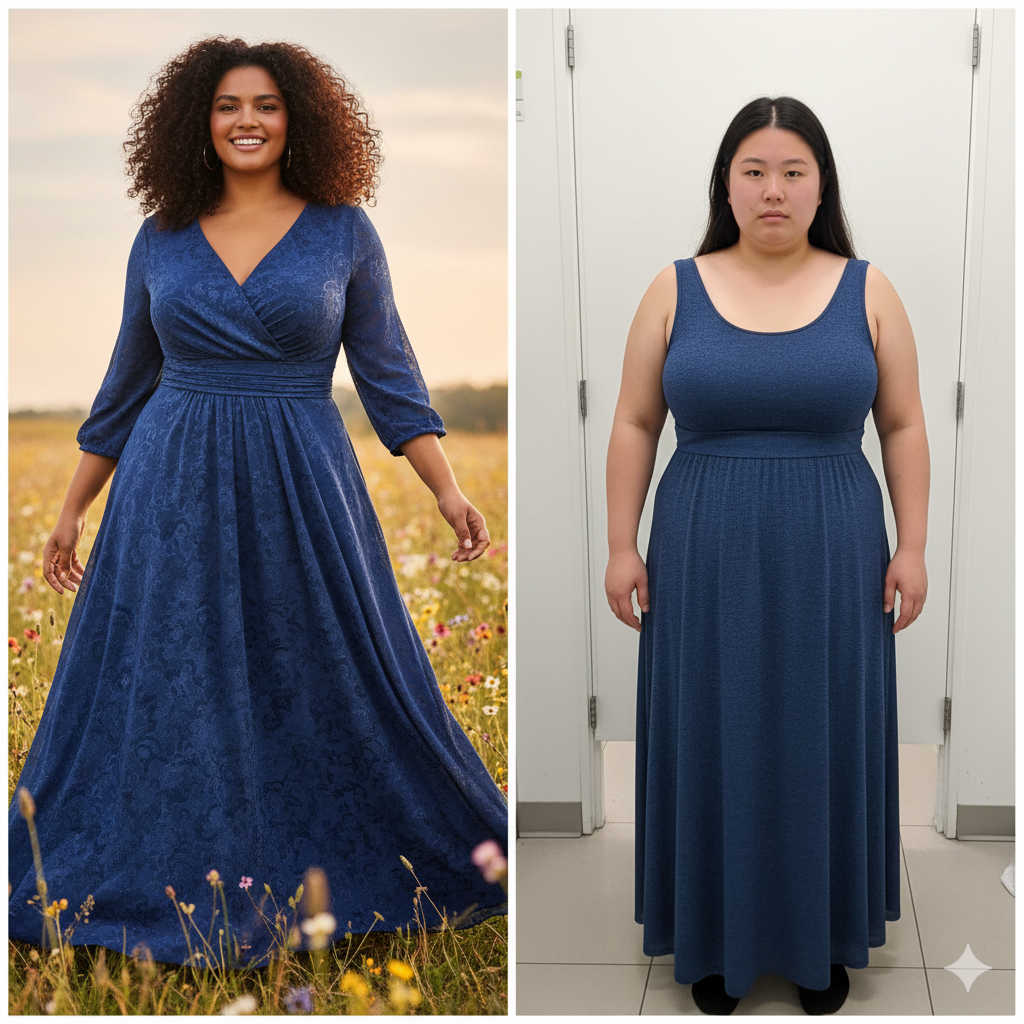
Let’s be honest — shopping as a plus-size woman can feel less like retail therapy and more like a psychological experiment. You walk into a store, hopeful, optimistic, maybe even a little excited. Fifteen minutes later, you’re questioning your self-worth in a poorly lit trial room because the “XXL” looks suspiciously like a “Medium.”
Welcome to the paradox of plus-size fashion — an industry that claims to be inclusive while still treating larger bodies as an afterthought.
The Illusion of Inclusivity
Over the last few years, we’ve seen every major fashion brand jump on the “body positivity” train. Models with curves are finally showing up in campaigns, hashtags like #EveryBodyIsBeautiful are trending, and clothing lines are expanding their size charts. On the surface, it all looks progressive — but when you dig deeper, it’s mostly surface-level marketing.
The truth is, many brands still use standard patterns and simply scale them up for bigger sizes. That doesn’t work. Bodies aren’t math equations. A size 18 doesn’t just need “more fabric”; it needs design consideration — different proportions, support structures, and movement comfort.
So yes, the tag may say “plus-size,” but the fit says “we didn’t really think this through.”
Fit vs. Fashion: A False Choice
Ask any plus-size woman and she’ll tell you — finding something that fits usually means compromising on style.
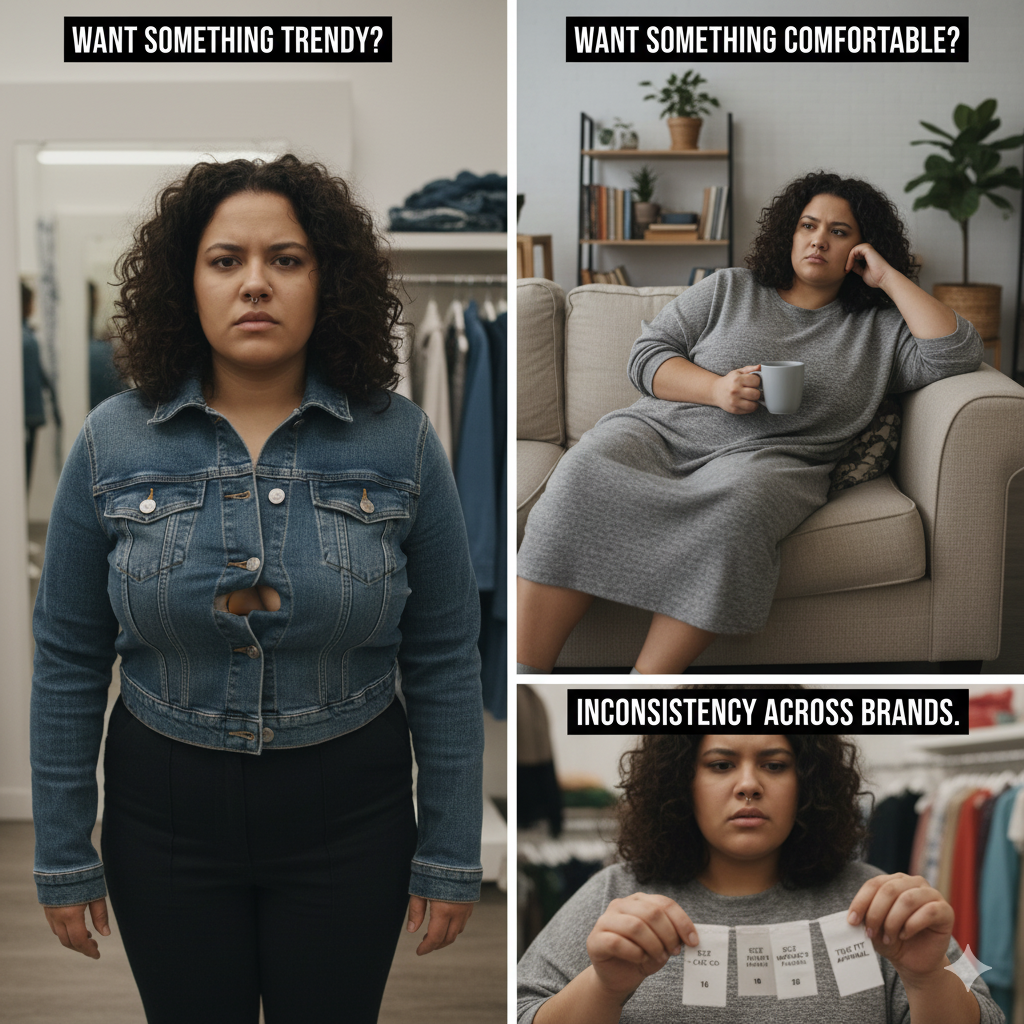
Want something trendy? It’ll probably be too tight on the chest.
Want something comfortable? Congratulations, you now look like you’re wearing a curtain.
The industry often assumes plus-size women only want “loose and modest” designs. It’s lazy stereotyping. Many women want structured, stylish clothes that celebrate curves, not hide them. The fact that such options are rare speaks volumes about how disconnected fashion designers are from real people.
What’s even more frustrating is the inconsistency across brands. You could be a size 16 in one label, 18 in another, and mysteriously a 20 somewhere else — all on the same day. It’s not you. It’s the lack of standardized sizing systems and real-world testing on diverse body shapes.
The Confidence Paradox
There’s another layer to this — emotional fatigue.
Constantly struggling to find clothes that fit chips away at confidence. Society keeps preaching “love yourself,” but it’s difficult to feel empowered when the industry itself tells you — through design and availability — that you’re an exception, not the norm.
Some women start avoiding shopping altogether. Others settle for clothes that “just fit enough.” And slowly, the simple joy of dressing up turns into anxiety. This is not a personal problem. It’s a systemic one.
The Market Myth
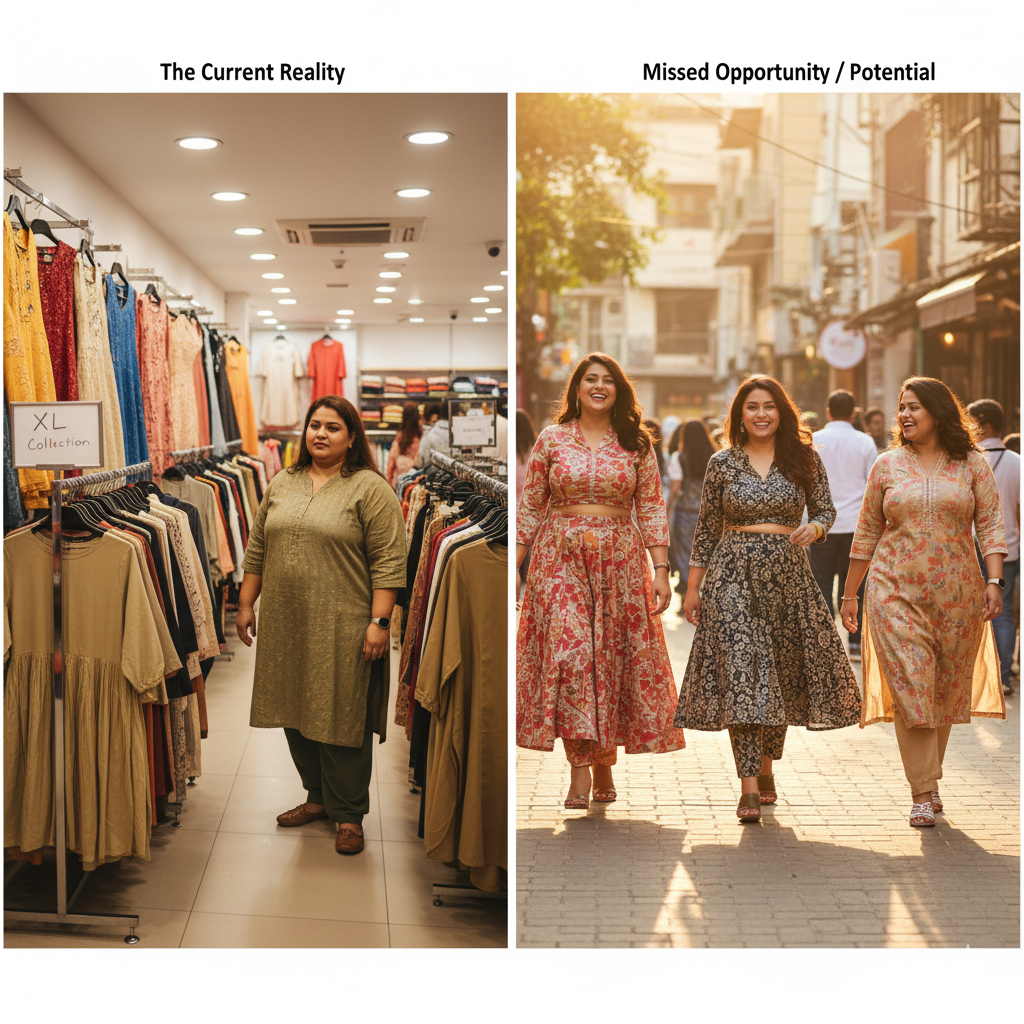
Here’s the ironic part — the demand for plus-size fashion is massive. A report by Statista and Mintel (2023) estimated that the global plus-size apparel market is worth over $200 billion, and growing faster than standard-size fashion. That’s not a niche. That’s a goldmine.
Yet most mainstream brands act like they’re doing some kind of charity by offering “extended sizes.”
Why? Because the fashion world still runs on outdated ideals of what “beauty” and “aspiration” look like. Designers create for the runway, not for real life. It’s easier to showcase tall, slim models and call it aspirational than to admit the majority of women don’t look like that — and never will.
Where the Real Change Is Happening
Thankfully, a new generation of brands and creators are pushing back.
Independent designers, often women who have personally experienced the struggle, are building inclusive labels that actually understand body diversity. They use real models, not digital retouching. They design patterns specifically for plus-size shapes.
Online communities are also changing the game — influencers, bloggers, and everyday women are showing how powerful representation can be. They’re styling bold looks, calling out brands, and reshaping the conversation from “How do I fit in?” to “Why should I?”
How We Can Push Back
If you’ve ever felt demotivated trying on clothes, remember — the issue isn’t your body. It’s the system. But here’s what helps:
- Support brands that truly prioritize inclusivity. Buy from small designers who make custom fits or pattern-based sizing.
- Speak up. Leave honest reviews about size inaccuracies. Tag brands that get it wrong (and right).
- Dress for yourself. Fashion should serve you, not the other way around.
- Build awareness. Share stories, talk about the challenges — silence only protects the status quo.
And if you’re part of the creative side — a designer, blogger, or stylist — use that influence to normalize real bodies. Don’t chase validation; build representation.
Final Thoughts
Finding the right fit shouldn’t feel like a battle, but right now, it does — because the fashion world still hasn’t caught up with reality. Plus-size women are not a side category; they are the majority. They deserve better design, better respect, and better representation.
Until that happens, spaces like Plus Glamour Fashion will continue to speak up, create awareness, and empower women to celebrate their bodies exactly as they are — not when they “fit in,” but because they already belong.